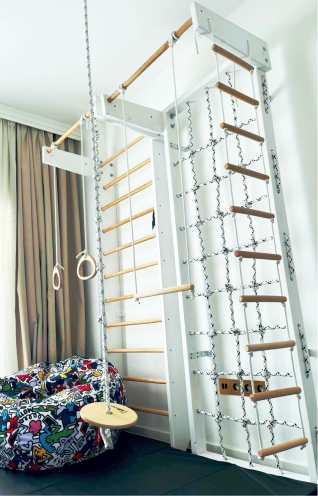
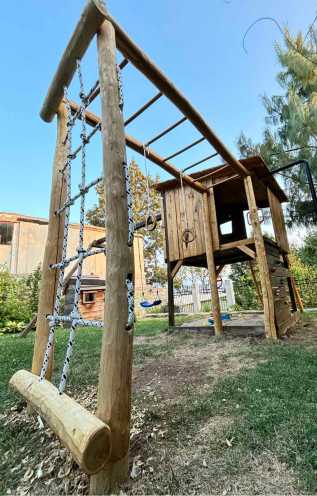
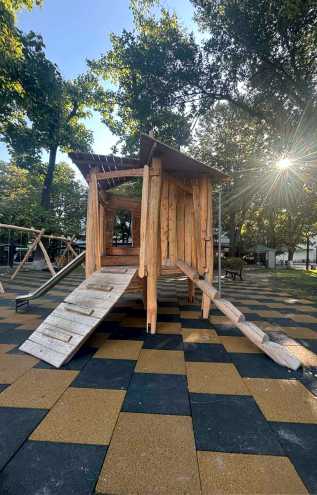
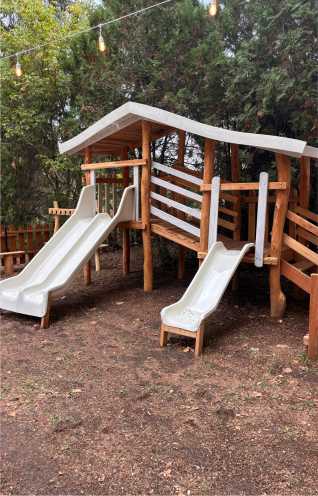

How does the Swedish wall for babies and adolescents develop the child’s full potential?

At the very beginning, at birth, children begin to develop and learn through their sensorimotor skills. Many scientists, such as Jean Piaget, have studied early childhood development and unanimously agree that in their first years, children develop thanks to the sensations they experience – taste, sight, sound, touch. From the very first day, the little man boldly grabs your finger and tries to taste it. According to Jean Piaget in his “Theory of Cognitive Development”, human development is divided into four stages – “Sensory-motor” stage – from birth to 2 years of age; “Preoperational stage” – from 2 to 7 years; “Concrete operations” stage – from 7 to 11 years and “Formal operations” stage – from 11 years to the end of our lives. To some extent, the names of the stages themselves suggest which characteristics are leading to the development of human intelligence at the respective stage, but the fact that we begin with sensory motor skills leads us to the idea that it remains constructive for the development of human intelligence throughout our lives.
We can even find evidence that psychomotor skills are one of the best learning methods, leading to 100% success in the acquisition of new knowledge and the optimal development of the moral-volitional qualities of the child’s personality. Bernard Aucturier is a modern psychologist who began his career as a physical education teacher and in his practice found that motor activities increase children’s cognitive skills, as well as the causes of some children’s difficulties are rooted in emotional dysfunctions and relational behavior.
In this line of thought, considering the works of prominent psychologists and educators who have contributed to innovative practice and trends in raising children from early to adulthood, we can only conclude that Aristotle’s thought “Movement is life, and life is movement!” – can absolutely be paraphrased with the words “Movement is an educational experience, and an educational experience is movement!”.
In order to help little people develop and learn through play, it is our responsibility to provide a well-organized and safe environment with the necessary didactic tools. Maria Montessori, founder of the Montessori method, recommends that didactic tools not only be adapted to the age characteristics of children, but also be made of natural materials (wood, textiles, etc.).
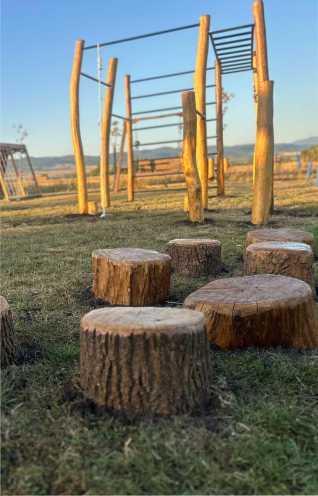
That is why today we will consider a unique proposal, suitable for both your home and your garden.
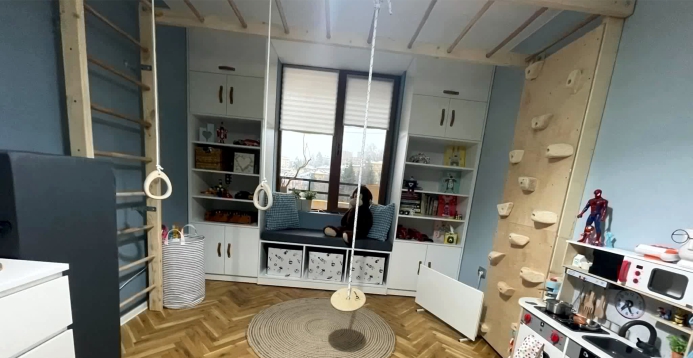
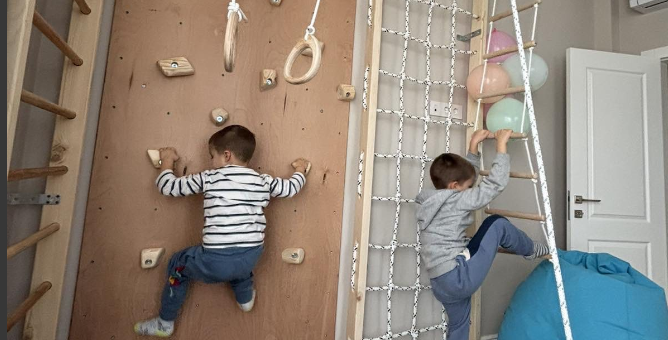
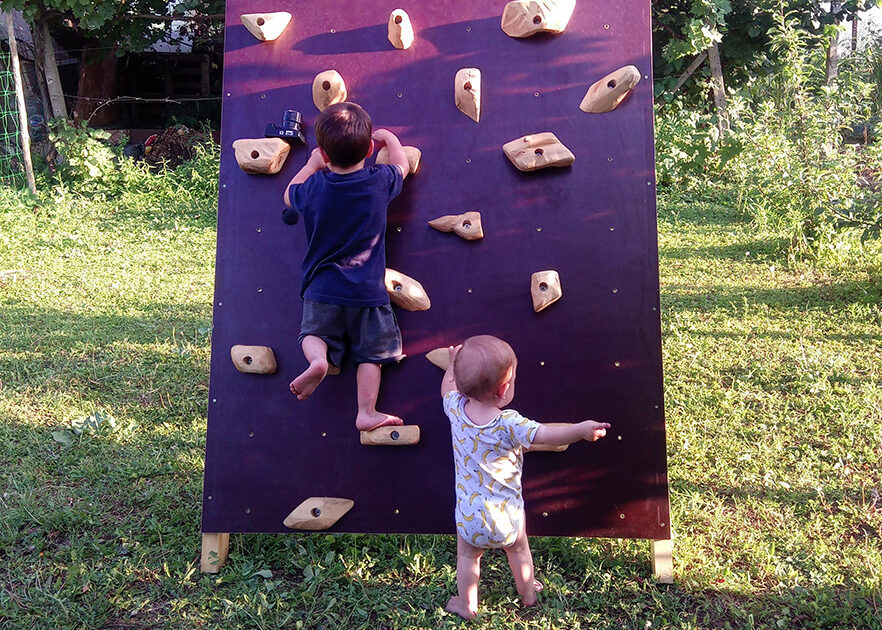
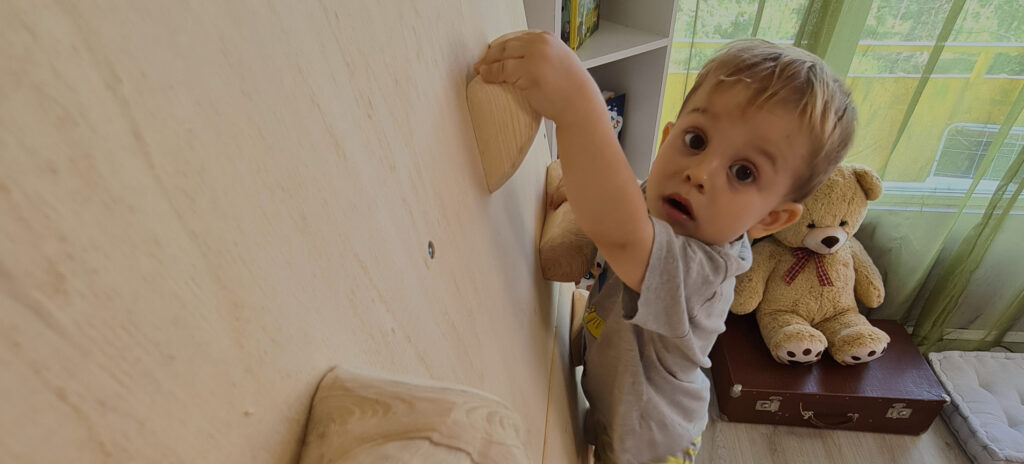
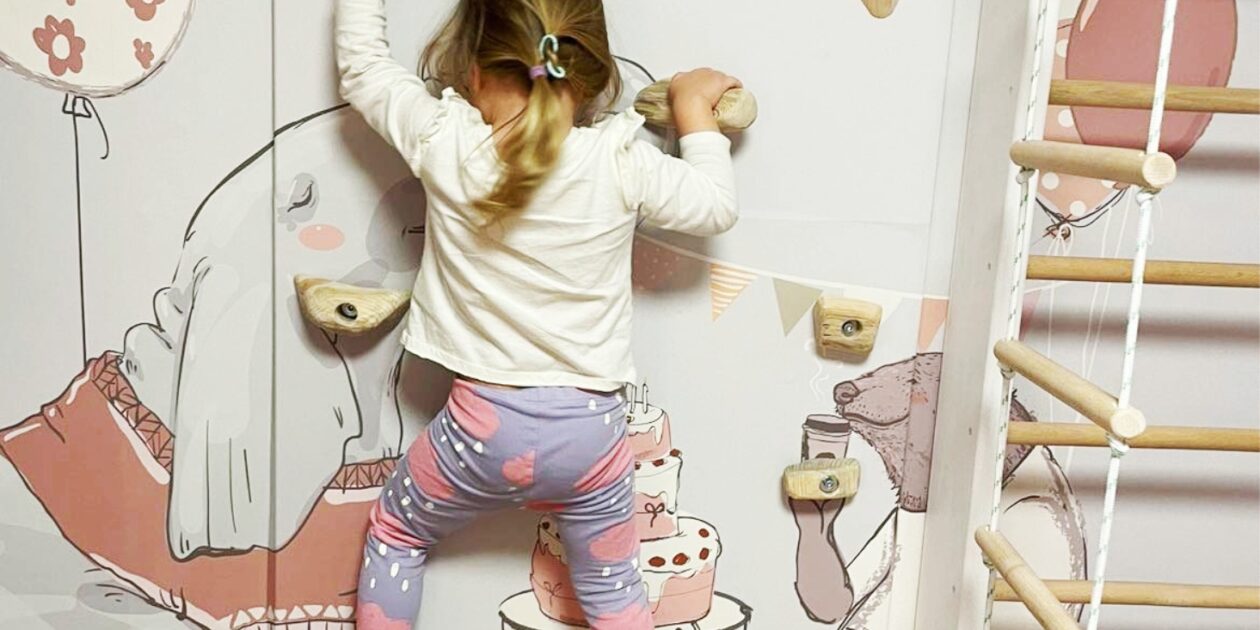
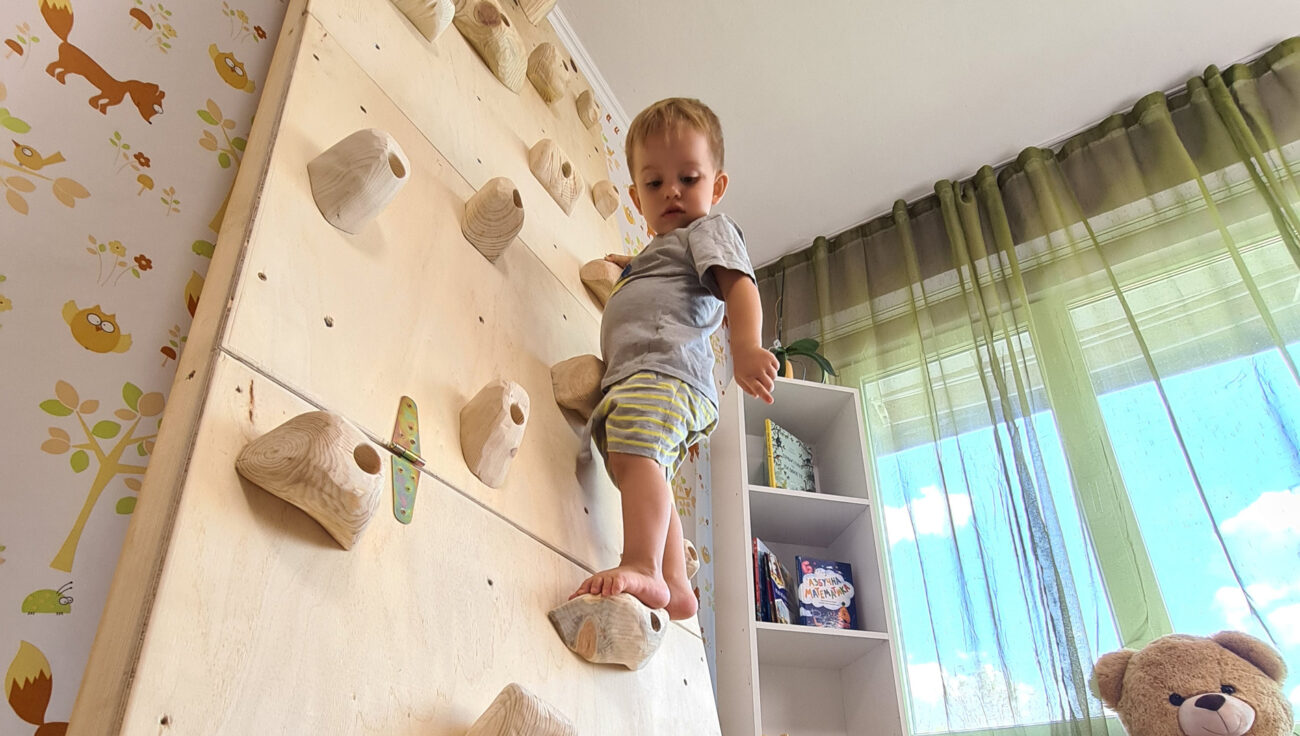
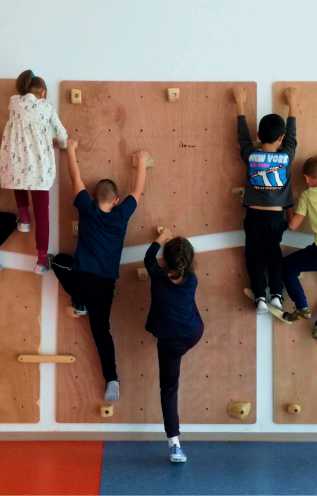
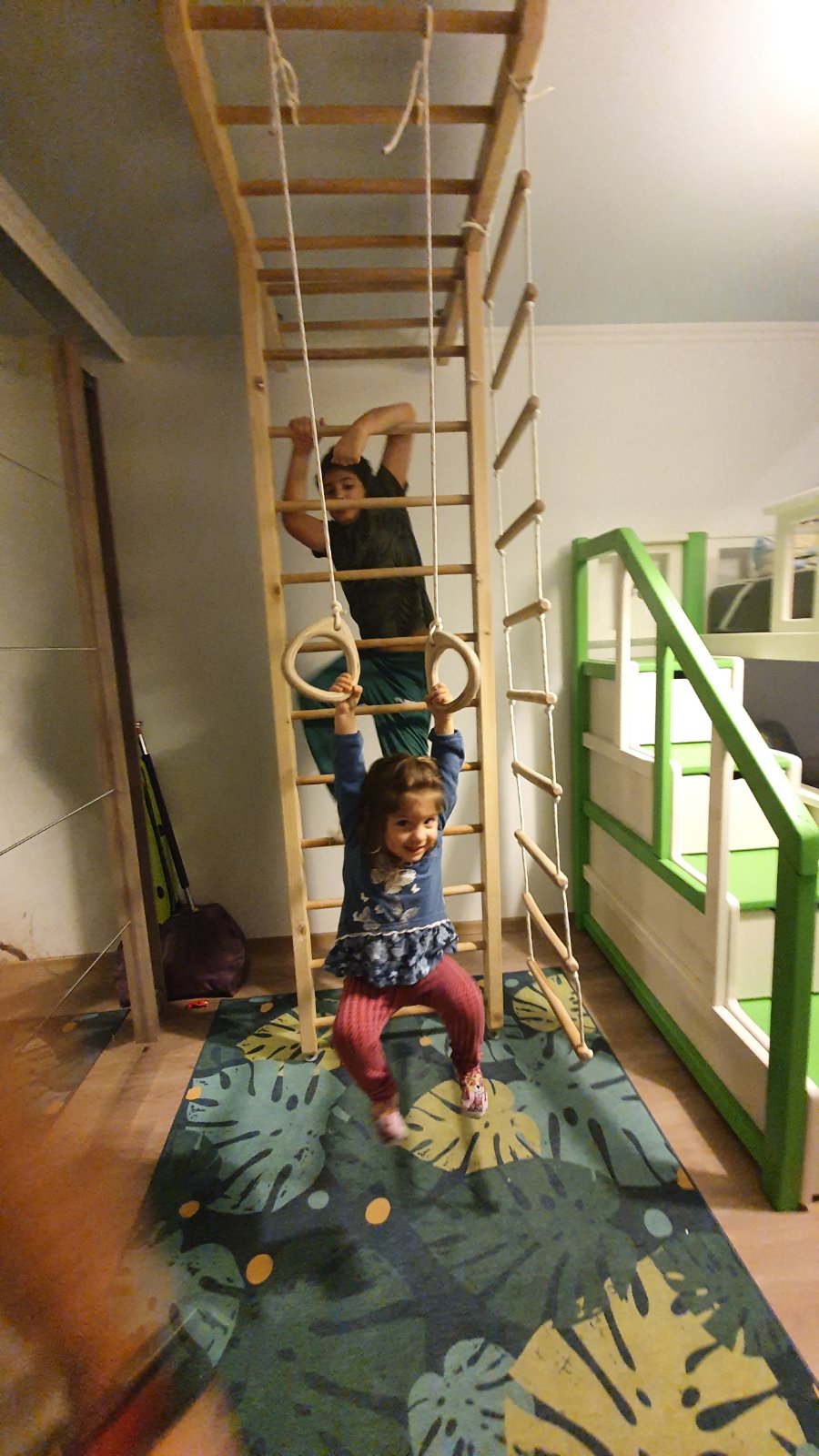
A Swedish wall for babies and teenagers is a very interesting tool that allows games to be varied and filled with adventurous excitement. It can be modified and its difficulty changed by changing its slope and length, and various additional devices are added.
The Swedish wall for babies and teenagers is such a didactic tool that develops the full potential of the child, because it is not focused on one specific area or skill. The Swedish wall supports the development of the whole body, by developing all physiological qualities – strength, endurance, agility, speed. In the youngest children, it helps develop fine motor skills of the hands, which at a later stage facilitates the formation and development of the motor habit of writing with a pen or drawing with a pencil. This is done by improving the various hand grips on the wall. It develops the shoulder girdle, which prevents various spinal curvatures. And nowadays, unfortunately, a sedentary lifestyle is increasingly seen in children, as well as overweight or deformities in the musculoskeletal system. The abdominal muscles, legs – in general, the whole body – develop. And as we have already mentioned, when the body develops, the cognitive skills of each individual also improve from the earliest to the most mature age. That is why the formation and development of the following moral-volitional qualities is observed – responsibility for safety, confidence, creativity in solving problems, perseverance, independence, energy and healthy lifestyle habits.
With our products we manage to combine all these options, creating a suitable environment and variety of movement.
Take a look at them or contact our team by phone or e-mail to offer the most suitable for your needs – age, child’s experience, space, budget, time range of use, individual design, etc.