
Swedish wall or climbing wall – that is the question!

The Swedish wall and the climbing wall are our heroes here. In this article, friends, we will look at the advantages and differences of these two climbing and training devices. We will try to convey our personal experience not only as creators of these products, but also as parents of two little squirrels.
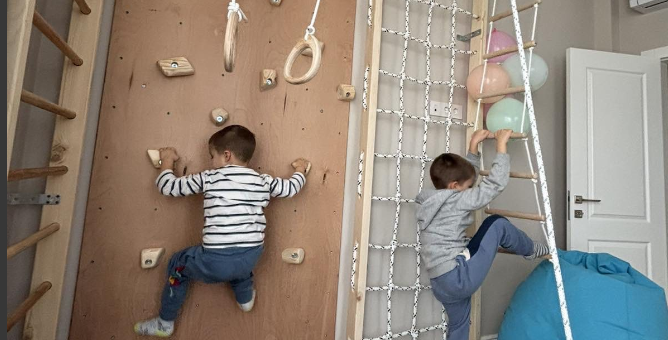
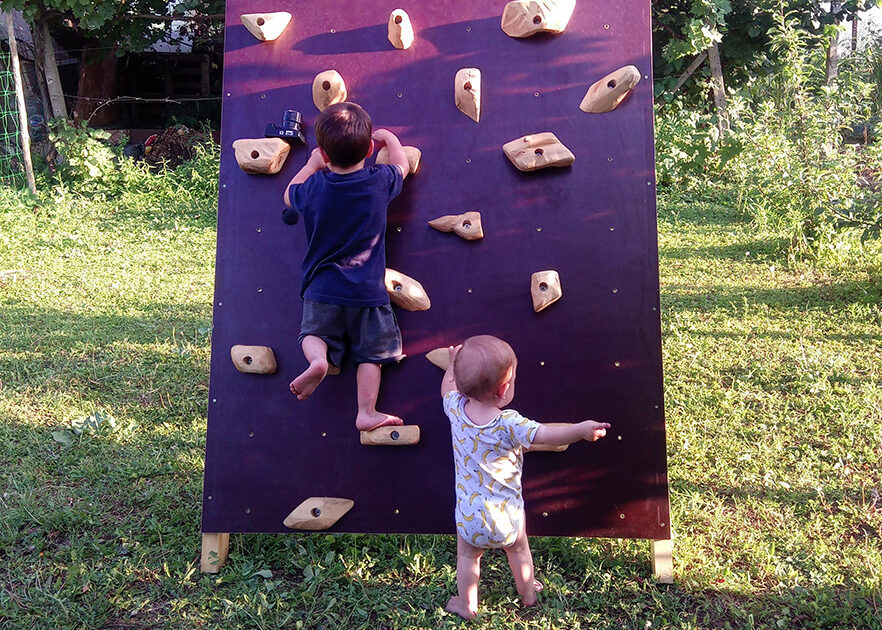
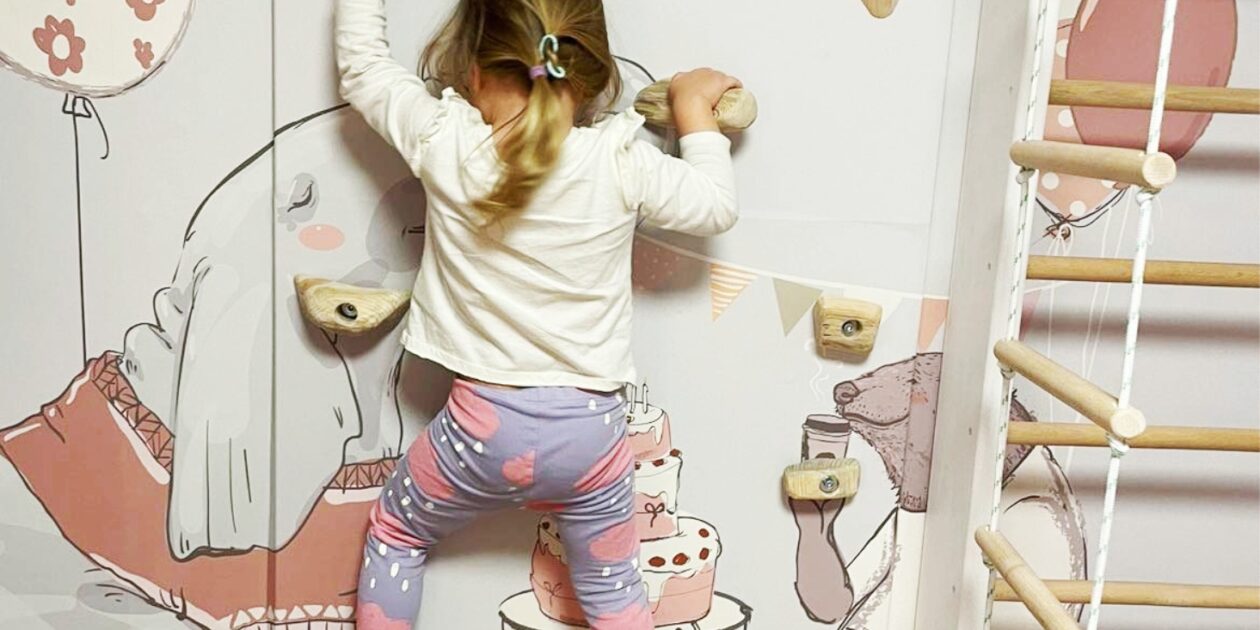
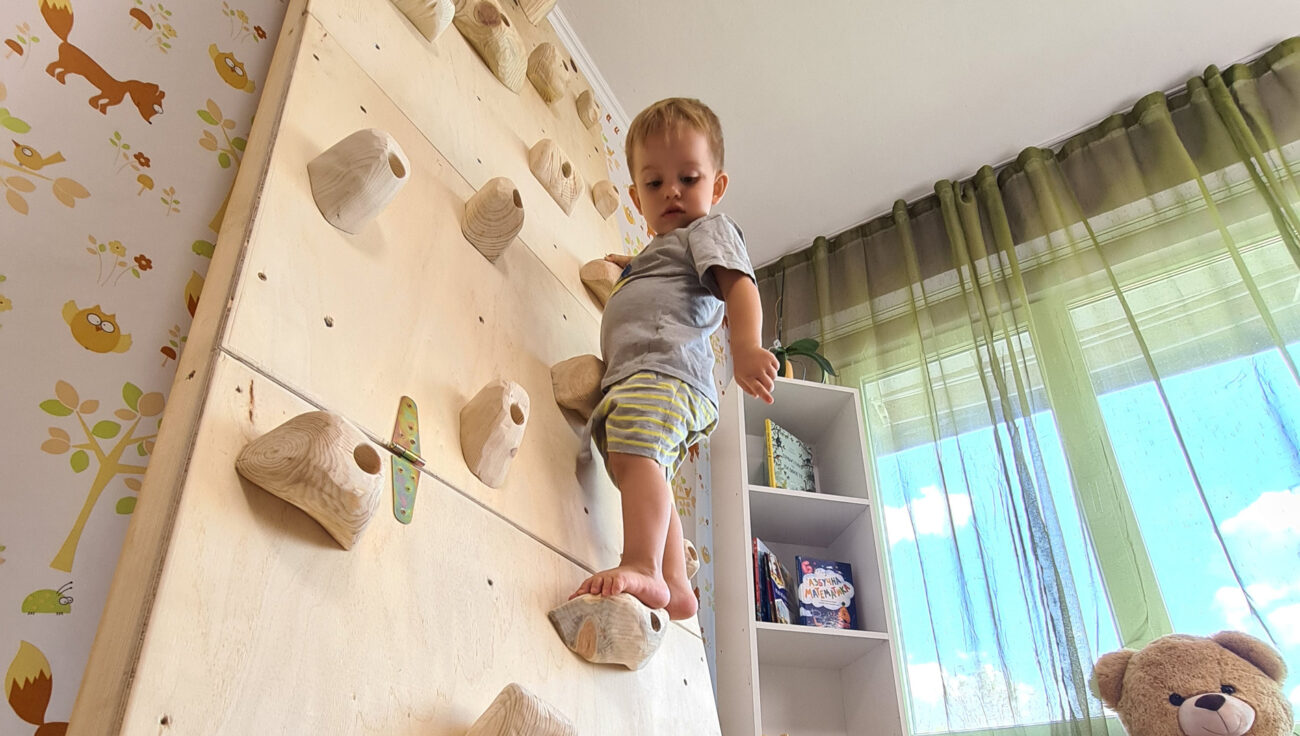
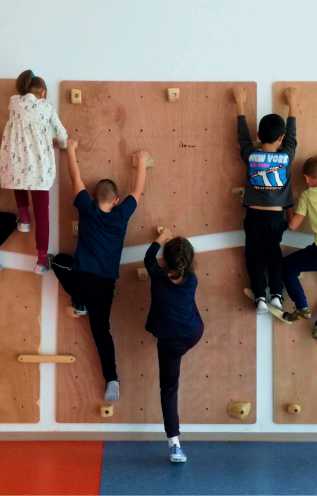
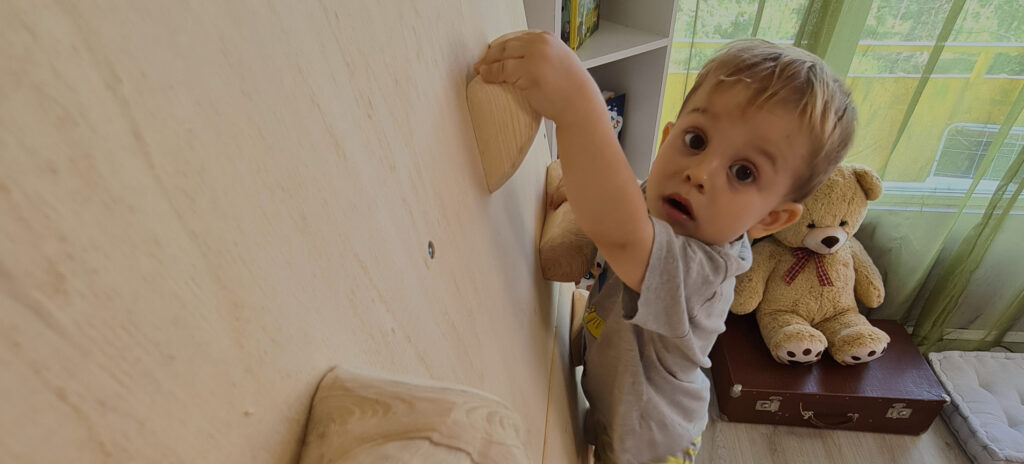
We at Katerica recommend that children begin their exploration of the vertical world with a climbing wall with grips. We have created several of our foldable models, designed and adapted for the youngest. The reason for this is that climbing a wall with grips stimulates in a specific way the impulses that the limbs send to the brain. Since the movements are with all four limbs, the so-called cross-stimulation effect is created. The right limbs send impulses to the left half of the brain, and the left limbs – to the right half of the brain. The grips are of different sizes, relief, grip, position and grip.
The balance changes at every step and requires the body and brain to make constant calculations. This creates the daily stimulation that is actually the most valuable effect in early childhood development and is the leading one in our work as producers.
In addition, we have developed modifications of the climbing walls for very long-term use. Initially, when children are between 18 months and 2.5 years old, they move up the climbing wall in its folded version. Then the wall is unfolded and installed in a vertical position with the appropriate slope for the child. After 4-5 years, the wall can be positioned 100% vertically.
Depending on the age at which you want to provide these incentives, your involvement as parents also depends, which has its advantages and disadvantages. The advantages are that you will be able to observe these leaps in your child’s growth, because he will need you and your support at the beginning. We call it “family team building” or life support and transfer of skills from parent to child. Most noticeably for children, this process happens through real actions. It may seem a little difficult at first, but believe me, it will pay off in the future.


Allow us to share our personal experience as parents! Our sons are 4 and 6 years old, with the youngest climbing since he was 8 months old, and our older son – since he was 1.5 years old, and we have long forgotten what it is like to be helped to climb or overcome obstacles. Believe me, climbing from a young age gives young children amazing abilities to believe and assess their capabilities, knowing that they can handle different situations on their own. Climbing makes children more fighting, persistent, driven, confident and brave.
The disadvantages are that you will have to spend time helping the little ones. If you decide to start when the children are the youngest (18 months old), during this period you will have to teach them to move their legs, to watch their limbs so that they do not drop a step. At first they only climb up and you will pull them down in your arms, then you will move their legs so that they learn to go down. You will encourage them, have fun together, etc. But isn’t it precisely for these moments in life that we chose to be parents and have children?!

It’s time to pay attention to the Squirrel Wall. Each Squirrel Wall is quite well known as a device with countless applications. Sports, home exercises, children’s games, rehabilitation, medical purposes, fitness and gymnastics, etc.
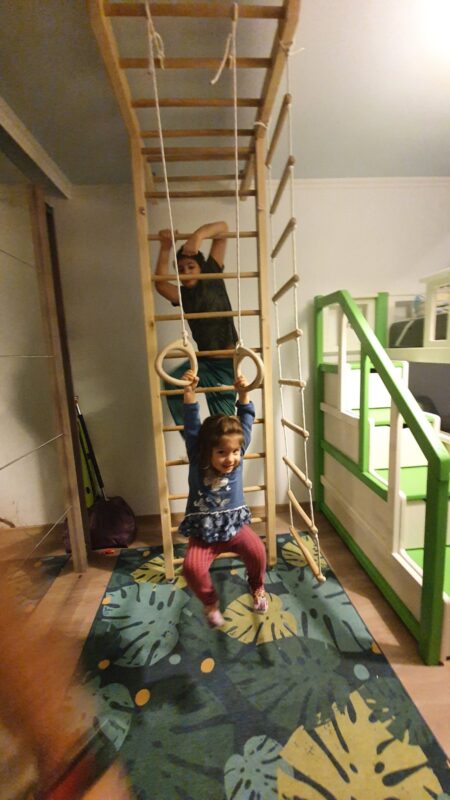
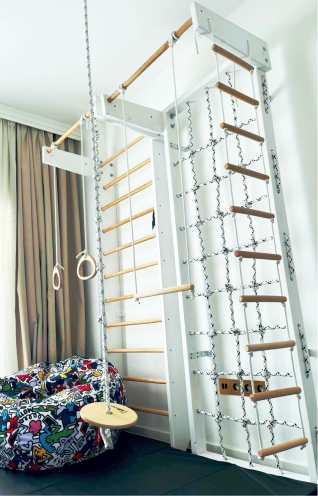
The Swedish wall has a comfortable and firm grip. The bars are comfortable enough for both small and large children. On it, children quickly get used to the comfortable grip, they feel safer, but climbing up does not have such an intense stimulating effect on the nervous system and brain as a climbing wall. With any Swedish wall, the isometric exercises that children engage in and all sorts of games that they invent on the hanging accessories that we have developed and offer are more important.
Swinging, picking up, spinning, hanging, sliding, descending, swinging, climbing, balancing – all this happens in a free game on our equipment and children manage to explore the space in all possible ways and variations. The creative process is directly affected in this whole game, because developing imagination is no less important than physical qualities.
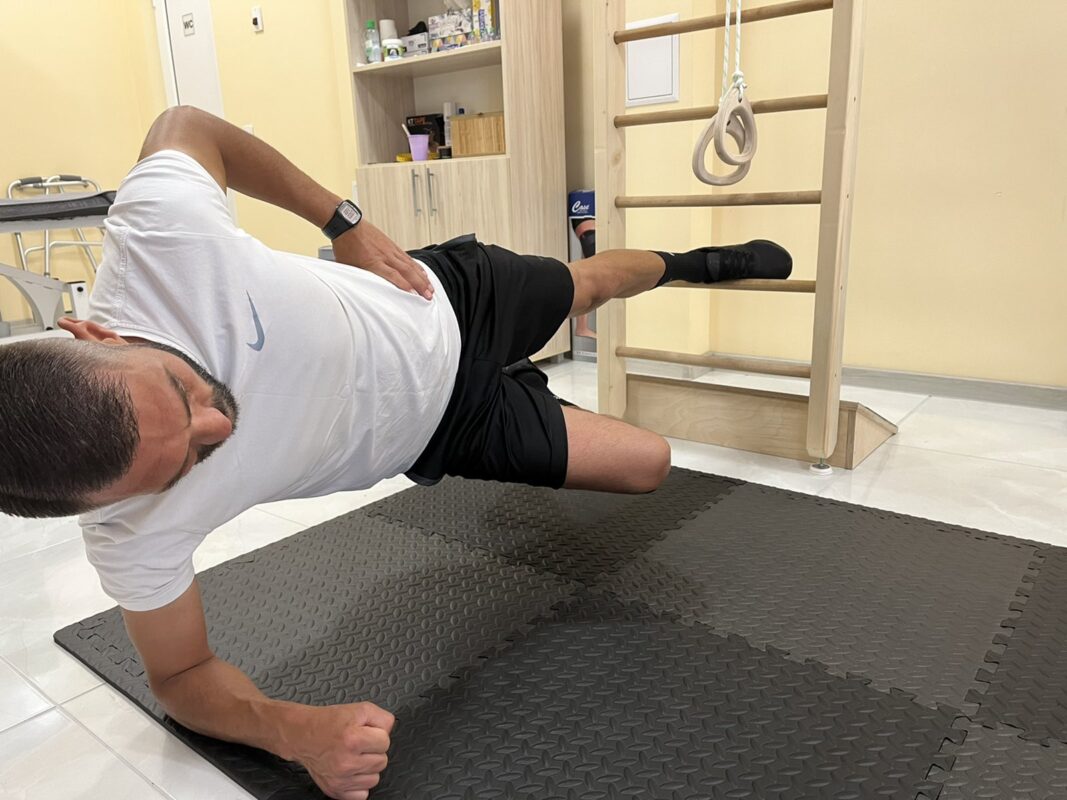
It is good to keep in mind that the Swedish wall and its derivative variations that we have created can be used very long-term by children, young people and adults for training, exercises, rehabilitation or remedial gymnastics. This makes it a device with a fairly universal character and use. With a few elastic bands, weights and a Swedish wall you can replace going to the gym. This way you will save time going to the gym and train whenever and as much as you want.


For daily toning, we recommend 20-30 minute workouts that will keep your physique in good shape while simultaneously relieving your mental stress.


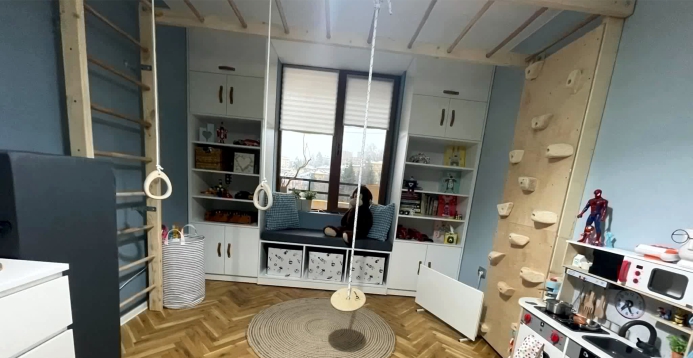
And the best thing is that both devices can be combined. Single models of both types can be combined or, as is often the case, we can develop an individual design for a play corner in the children’s room based on the age of the children. The budget is also an important factor in finalizing the project, but we are quite flexible in this regard and always find the most suitable options based on age, space, functionality and optimal budget. In the end, the results are wonderful, and the children always like their room the most of any other space in the house!
We hope you found this article useful, friends. Everything written in this article is based on our personal experience with our own children, their personal conclusions and statements, as well as feedback from hundreds of families as our clients. We are happy when we contribute to the development of Bulgarian children and believe that together we are changing the world for the better.
Katerica – FROM SMALL TO TOP!
Denitsa and Martin Marinovi